

Have you ever felt bored, disappointed, or simply not wanting to continue reading a book you’ve already started? I know, that book is still on my nightstand too. But let me tell you, it is fine to simply put it down and find another one.

I used to think every book I decided to open and read the first sentence of, was a book I was “destined” to finish (and by destined I mean it became an absolute must). At the time it didn’t matter at all if I was enjoying it, or if I was taking years —quite literally sometimes— to finish said book, I just had to finish it.
This mindset of mine became so rigid that I took it as far as to keep myself from picking up another book —that was clearly calling my name from the shelves or the bookstore— as a way of self punishment for not finishing first the book I already had in hand.
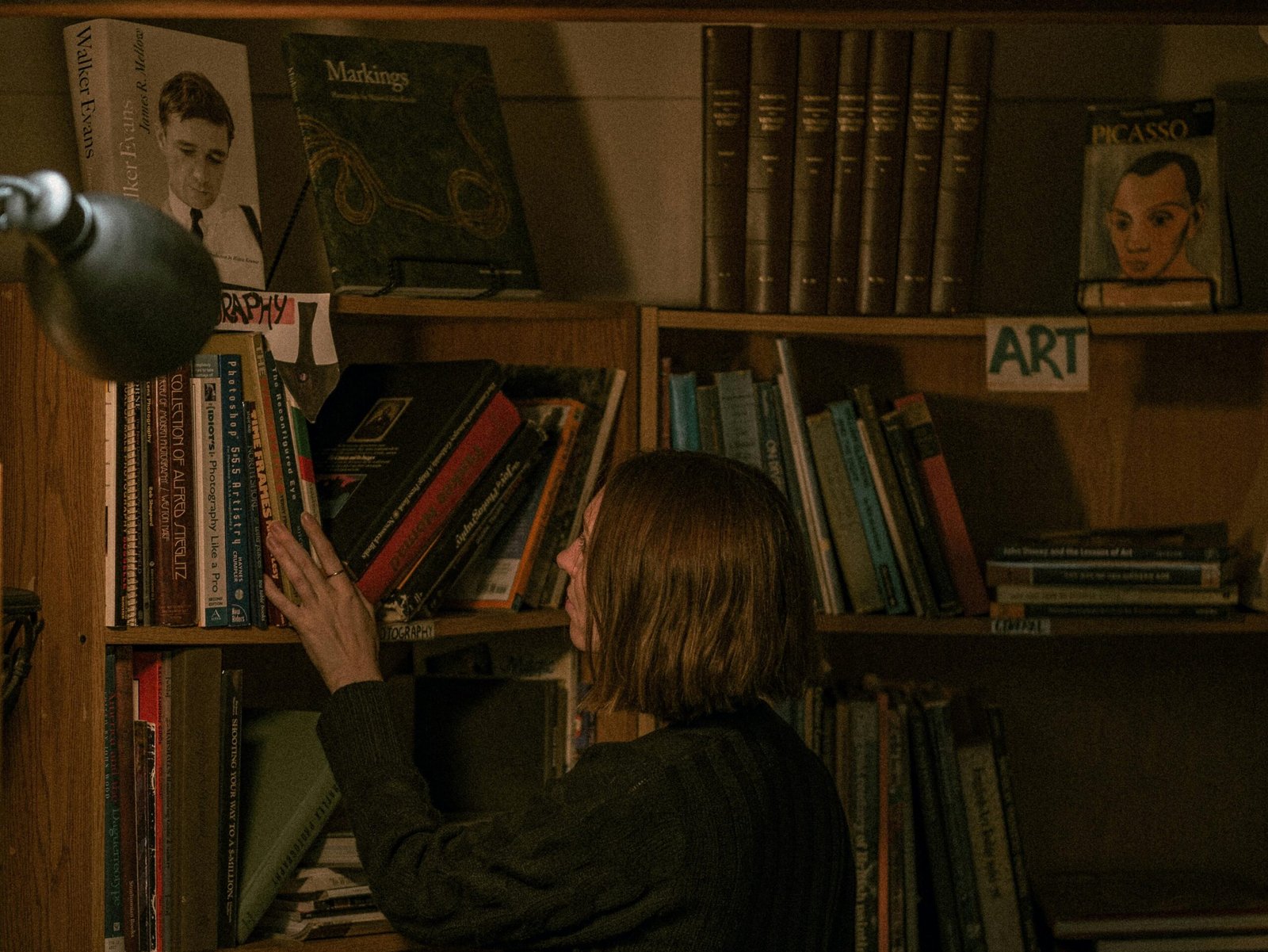
That harsh self-imposed mania only got me to stop reading for pleasure for quite a long period of my life. And mind you, reading has been the only passion I have had for as long as I can remember… escaping reality, living a hundred lives, touring the world, feeling the thrill, finding love a thousand times, dreading the scare, laughing at the funny moments, and so on… I mean, who wouldn’t find passion in doing all that just by turning a few pages from the comfort of their own couch?
And yet, there I was, avoiding starting a new reading adventure all because of some sort of misguided, strict discipline regime that shouldn’t have had a place within my hobbies at all.
Well, some time after, I got tired of simply avoiding and felt the need to know why this was happening. Why my brain would make me feel such guilt whenever I couldn’t finish a book for whatever reason it was. And it was only when I started digging into the why that I realised this nagging guilt had been studied, named, and understood long before I ever felt it.

It is all rooted in psychology and culture. Let’s briefly discuss psychology first, because there is this quite interesting piece of information I found while reading about it.
There is a term for this behavior, it is called the Zeigarnik effect (called after the psychologist Bluma Zeigarnik who studied this phenomenon back in 1927), and it pretty much describes how our brains are subconsciously capable of distinguishing an unfinished task from a finished one. In our brain, every unfinished task creates a “psychological tension” —as Zeigarnik named it— that forces our memory to come back again and again towards said task. In summary, our brains are wired to reach completion, otherwise, we subconsciously get that nagging feeling of incompletion that eventually leads to a guilty feeling and the sensation of failure.
As for the cultural aspect… I’m pretty sure most of us have been taught since childhood that leaving something unfinished is a reflection of our own inability and lack of discipline, which inevitably shows a result of personal failure. And let’s be honest, no matter how psychology defines failure as part of a learning curve, or how much character it helps form into a person, it stings, and it is in our human nature to avoid feeling like failing. Additionally, there is something called the sunk cost fallacy, and it pretty much means we continue putting effort and time into something that by now, may not even be worthy. Just because we have already started, or because we have already read the first chapter, or even maybe half of the book for that matter. But again, the truth is, if you are no longer enjoying it or getting something out of it, just leave it, and find another book.
When I understood the why —and pretty much thought it had quite a lot of sense— I started reading and listening to other people’s opinions and experiences. Naturally, a lot of us have been through the same nagging feeling of not being able to abandon a started book we no longer want to continue reading.
Nancy Pearl, librarian and critic, puts it simply: life is too short to not put down a book you’re not enjoying. Pearl talks about her rule of 50 pages: give a book a fair chance by reading at least 50 pages of it then decide if you need to put it down because you are not really liking it.
You don’t have to strictly follow Pearl’s rule though. You can create your own system that will help you navigate this issue on your own terms, of course. You can have your own DNF (did not finish) list without shame, or you can create a “not right now — maybe later” list of books you acknowledge are not for you at the moment. You can have that list on your reading journal with each book name preceded by a short note to yourself saying why you stopped reading it. And if your books are physically in your home library, add a little sticky note with that message for your future self. You can get creative with this; your only goal is to make it work for you.

In the end, there are several, very valid reasons to abandon a book: it didn’t meet your expectations, you found it boring, predictable, or maybe too complex; it’s not your genre, it’s the same story as one you’ve already read, you do not feel like reading it at the moment, or simply just because. Whatever your reason is for abandoning a book, it is fine. It is ok. It is totally valid.
It does not mean you have failed to complete a task. It means you understand what you want in the moment. It denotes self-knowledge rather than non-commitment.
Besides, who knows? maybe you will pick up that same book a few years from now and won’t even be able to put it down until you finish —that will only mean your first encounter with the book was just not at the right time— which is great!
Or you won’t ever touch it again, which is great as well! Because life is too short indeed to waste time in a book you don’t enjoy, when there is so much out there that will give you the reading time of your life.
So if there is a book sitting on your nightstand right now that you have been dreading picking up, consider this your absolution. Put it down. Without guilt. And go find the one that is actually calling your name!
Sources
Tellili, R. Stop Feeling Guilty About Not Finishing a Book: The Case Against Exhaustive Reading. Estimable Books.
Why Readers Leave Books Unfinished. Moneycontrol, 2022.
Rose, H. The Psychology of Unfinished Tasks: The Zeigarnik and Ovsiankina Effects. Ness Labs, 14 June 2022.
Sawhney, V. Why Your Brain Dwells on Unfinished Tasks. Harvard Business Review, 12 October 2020.
My book club has a rule: you can drop any book after chapter 3. No questions asked. Best rule we ever made. We enjoy reading again.
I have been currently reading The Goldfinch for like 8 months and I just… cannot. After reading this I officially give myself permission to let go lol